
Assessment is one part of understanding the whole person.
Structured assessment can provide an important perspective. Mind Journey places that information within a broader journey of understanding—alongside relevant context, experiences, development, and progress over time.
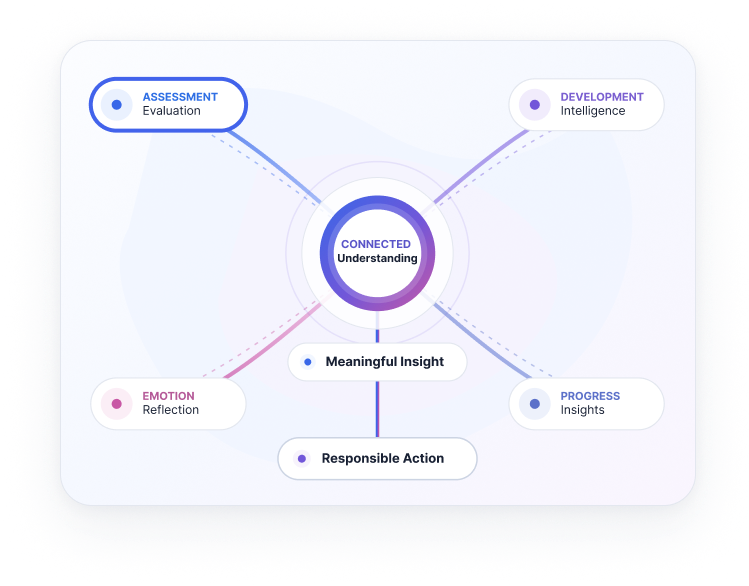
A STRUCTURED PERSPECTIVE
Structured questions can provide a
clearer starting point.
Assessment helps gather relevant information in a structured way.
What that information can contribute depends on the purpose of the assessment,
how it is designed, and the context in which it is used.
Structured
Information is gathered through a consistent format designed around a defined purpose.
Focused
An assessment can explore a particular area of psychological or developmental understanding within the scope of the assessment.
Contextual
Results become more meaningful when considered alongside relevant experiences, circumtances, and other available information.
Purpose Led
Different assessments serve different purposes. No single assessment should be assumed to answer every psychological or developmental question.
Not every assessment is diagnostic, suitable for repeated use, appropriate for every person, or intended for self-interpretation.
FOUR IMPORTANT DISTINCTIONS
Assessment is not the same as
evaluation.
Assessment, interpretation, evaluation, and professional judgement are related
concepts, but they are not interchangeable. Understanding the difference helps keep
psychological information in the right context.
01
Assessment
The structured collection of relevant information for a defined purpose.
02
Interpretation
Understanding what information may mean within its appropriate context, including its purpose, limitations, relevant history, patterns, and other available information.
03
Evaluation
Bringing relevant sources of information together to develop a broader understanding.
04
Professional Judgement
Qualified human judgement guides how information is interpreted and used when professional or clinical decisions are required.
Assessment
Structured SignalCollects relevant focused information
Interpretation
Explores MeaningUnderstands context, history & patterns
Evaluation
Broader PictureBrings relevant source together
Professional Judgement
Guides when decision required
Assessment provides information. → Interpretation explores meaning. → Evaluation considers the broader picture. → Professional judgement guides clinical decisions when required.
This concepts can overlap in professional practice and should not be understood as a rigid automated sequence.
A result becomes more meaningful when understood in context.
A result captures information from a particular assessment and moment. Meaningful understanding may also consider what is happening around that information and how relevant perspectives connect.
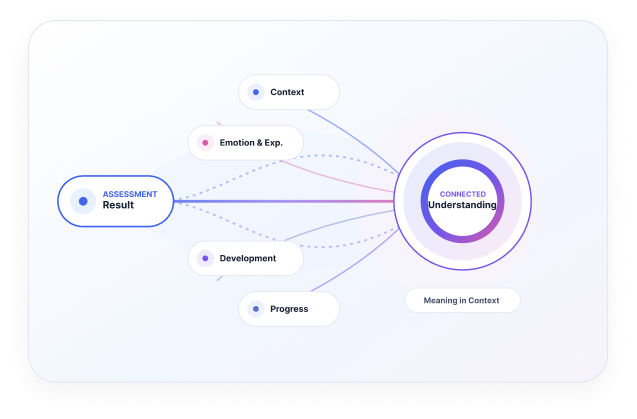
This information available will vary depending on the person, assessment, available capabilities, permissions, and professional context.
A score is not the whole story.
An assessment result should never reduce a person to a label.
Insight should support understanding—not define identity.
Assessment results can contribute useful information, but they should be understood according to the purpose and limitations of the assessment and the context in which information was gathered.
A score is a signal, not an identity
A result can describe information captured by an assessment. It does not define the whole person.
Context matters.
Experiences, circumstances, developmental context, and other relevant information may influence how a result is understood.
One result is one moment.
A single result should not automatically be treated as a complete picture of a person's psychosocial or developmental journey.
Limitations matter.
Every assessment has a purpose and boundaries. Results should be understood within them.
Some information needs professional interpretation.
When information has professional or clinical interpretation, qualified professional judgement may be important for understanding what it means and what should happen next.
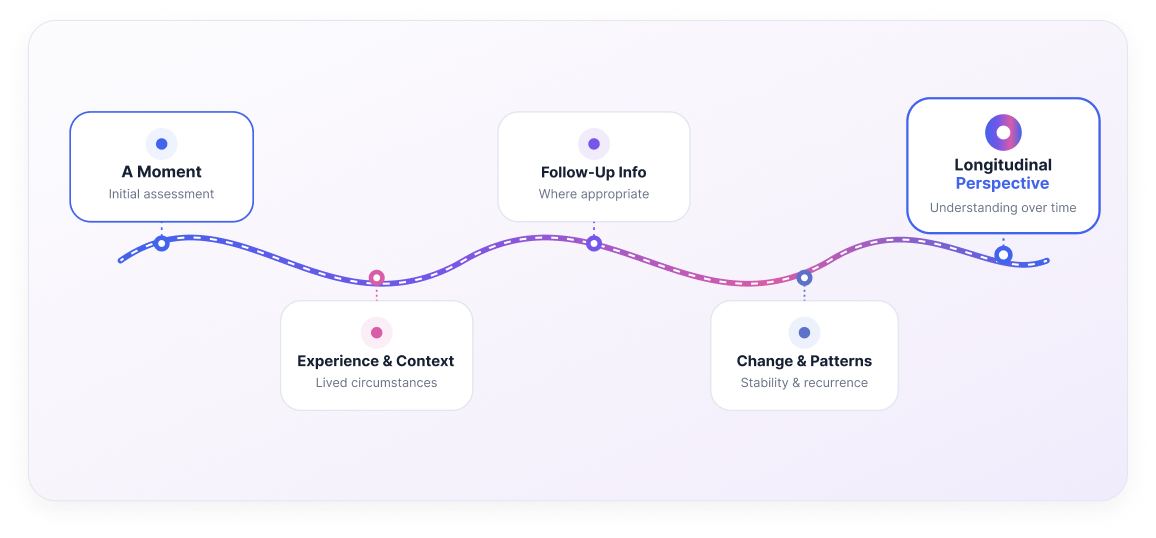
PERSPECTIVE OVER TIME
One assessment captures a moment.
The journey provides perspective.
Psychological and developmental understanding can change as experiences, context
and relevant information change. Where an assessment is appropriate for repeated use,
follow-up information may contribute to understanding change over time.
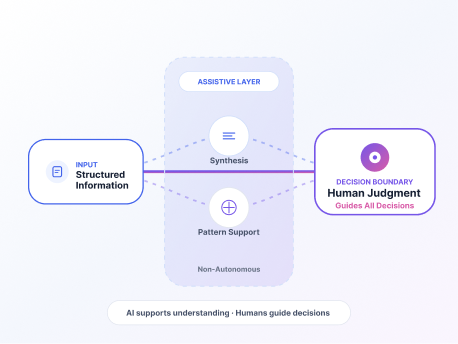
AI supports understanding.
Human judgement guides decisions.
Technology can support how information is organized and understood, but AI should not be treated as a psychologist, diagnostic authority, or replacement for qualified professional judgment.
AI is not diagnostic authority.
AI should not be presented as dependently determining a psychological diagnosis.
AI-generated information is not automatically professionalevaluation.
Technology-supported synthesis and qualified professional evaluation are not the same thing.
AI does not replace professional judgment.
When professional or clinical decisions are required, qualified human judgment remains essential.
AI should not create false certainty.
Psychological information requires appropriate context, limitations, and responsible interpretation.
Not every assessment is diagnostic, suitable for repeated use, appropriate for every person, or intended for self-interpretation.
CONTINUE THE JOURNEY
Assessment connects to a broader understanding.
Explore parts of Mind Journey that place structured information alongside everyday experience, development, and perspective over time.
Emotion & Reflection
Explore how everyday experiences and reflection can add context between structured assessment moments.
Explore Emotion & ReflectionDevelopmental Intelligence
Understood development as part of a broader psychological and contextual journey.
Explore Developmental IntelligenceInsights & Progress
Explore how relevant information across time can contribute to understanding patterns and change.
Explore Insights & ProgressHow It Works
See how different parts of Mind Journey connect to support a more complete understanding.
See How Mind Journey WorksUnderstanding Continues
Assessment connects to a broader
understanding.
Explore how Mind Journey connects structured information with context,
development, experiences, and perspective over time—while keeping
human judgement where it matters.